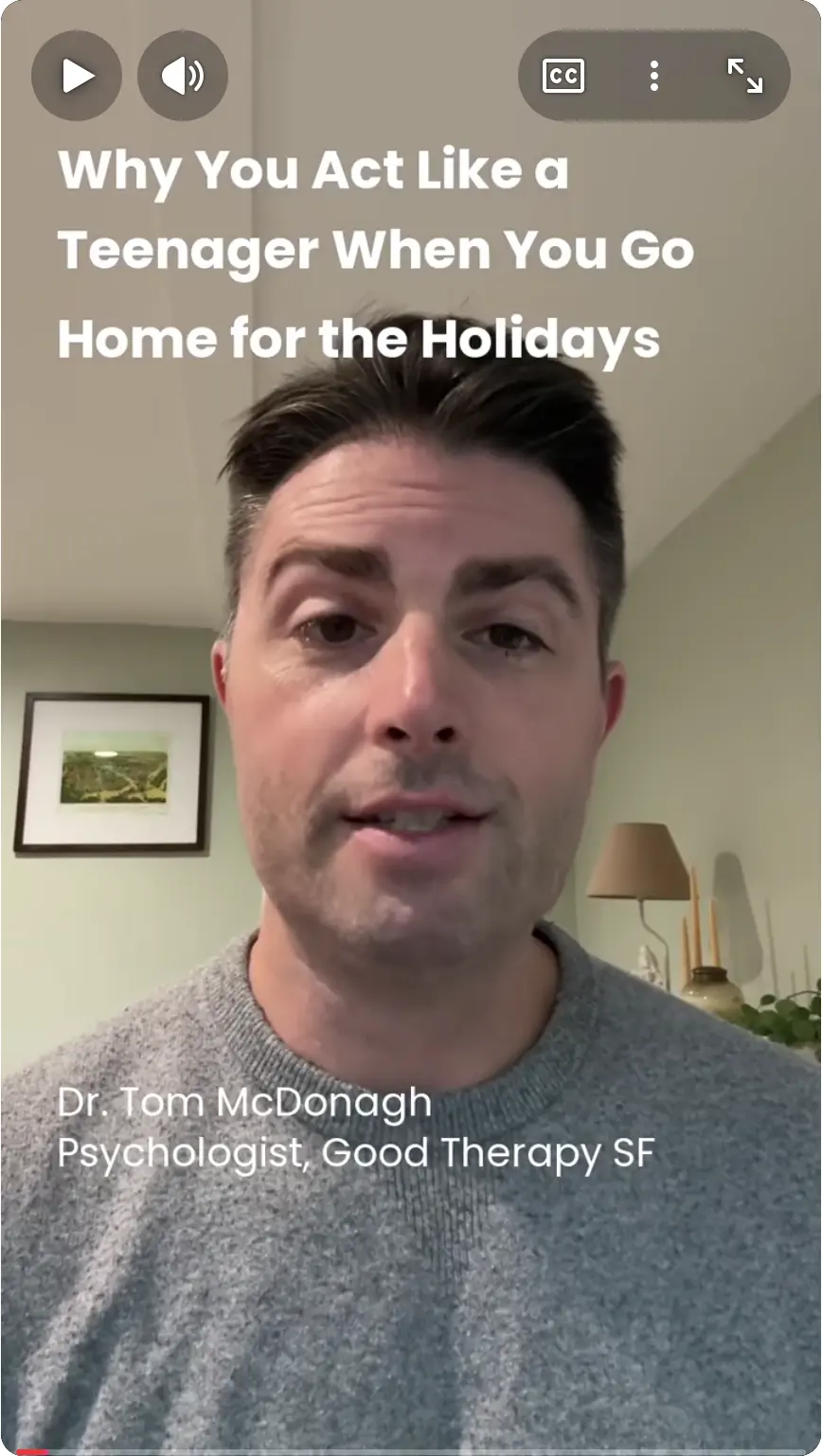
You go home for the holidays, and within an hour you’re acting like a teenager again. You roll your eyes at your mom. You go quiet when your dad asks about work. You get into the same argument with your sister that you had in high school.
You might have a career, a mortgage, even kids of your own. Then you sit down at your parents’ dinner table and start acting like a teenager all over again.
Most people I talk to notice some version of this every year. You haven’t lost the progress you’ve made. A few specific things about going home make the old habits easier to fall back into.
Every family has roles. Maybe you were the responsible one, the quiet one, the funny one, or the one who started arguments. Those roles made sense when you were growing up.
Your family may not have updated their picture of you since then. Your parents ask the same questions in the same tone. Your siblings tease you about the same things. When everyone expects that version of you, it’s easy to fall back into that role.
In my work with clients, I hear about this a lot after the holidays. Someone who manages a team all year comes back saying they spent four days feeling like a kid again.
You’re in the same physical place where those habits started. You might be sleeping in your old bedroom. You might be sitting in the same seat at the dinner table.
This association makes it easier for your old reactions to come back before you’ve had a chance to think. You might feel irritated before you even know why. You might hear yourself using a tone you haven’t used in years.
If the holidays tend to bring up family tension for you, our tips for managing family conflict over the holidays can help you plan ahead.
You’re probably more tired than usual. You’ve been traveling. You’re sleeping less, often in a bed that isn’t yours. Your schedule is full from morning to night.
When you’re worn out, it’s harder to pause before you react. It’s easy to regress into the old ways of behaving when you were younger. You might snap at a comment you would normally let go.
In sessions, I often point out that staying patient takes energy. If you show up exhausted, you have less patience to work with. For more on protecting your energy while you’re away, see our tips for coping with stress and anxiety during the holiday season.
Before you walk in, pick just one old pattern you want to change. Trying to change everything at once usually backfires.
Maybe it’s not taking the bait in an argument you’ve had a hundred times before. Maybe it’s answering your dad’s questions about your job without getting defensive.
When you notice that old pattern starting, pause and take a breath. Then respond the way you would want to respond as the adult you are now.
It also helps to plan short breaks. A walk around the block or ten minutes alone in another room can give you enough space to reset.
You probably won’t catch the pattern every time. Each time you do catch it, you get a little more practice responding differently.
If going home for the holidays leaves you feeling like a different person, talking it through with a therapist can help. The therapists at Good Therapy SF work with adults across San Francisco, Marin, and the Peninsula. Reach out for a free 15-minute consultation.
Dr. Tom McDonagh, PsyD, is a licensed clinical psychologist and the founder of Good Therapy SF. He trained at Vanderbilt and completed his postdoctoral work at Kaiser Permanente. His practice focuses on anxiety, OCD, panic, and work stress, with a special focus on San Francisco professionals. Good Therapy SF is located at 870 Market Street, Suite 617, San Francisco, CA.