You’ve thought about starting therapy for a while. You might even have a therapist’s website open in another tab. But you have no idea what happens in the first session, and that makes it hard to reach out.
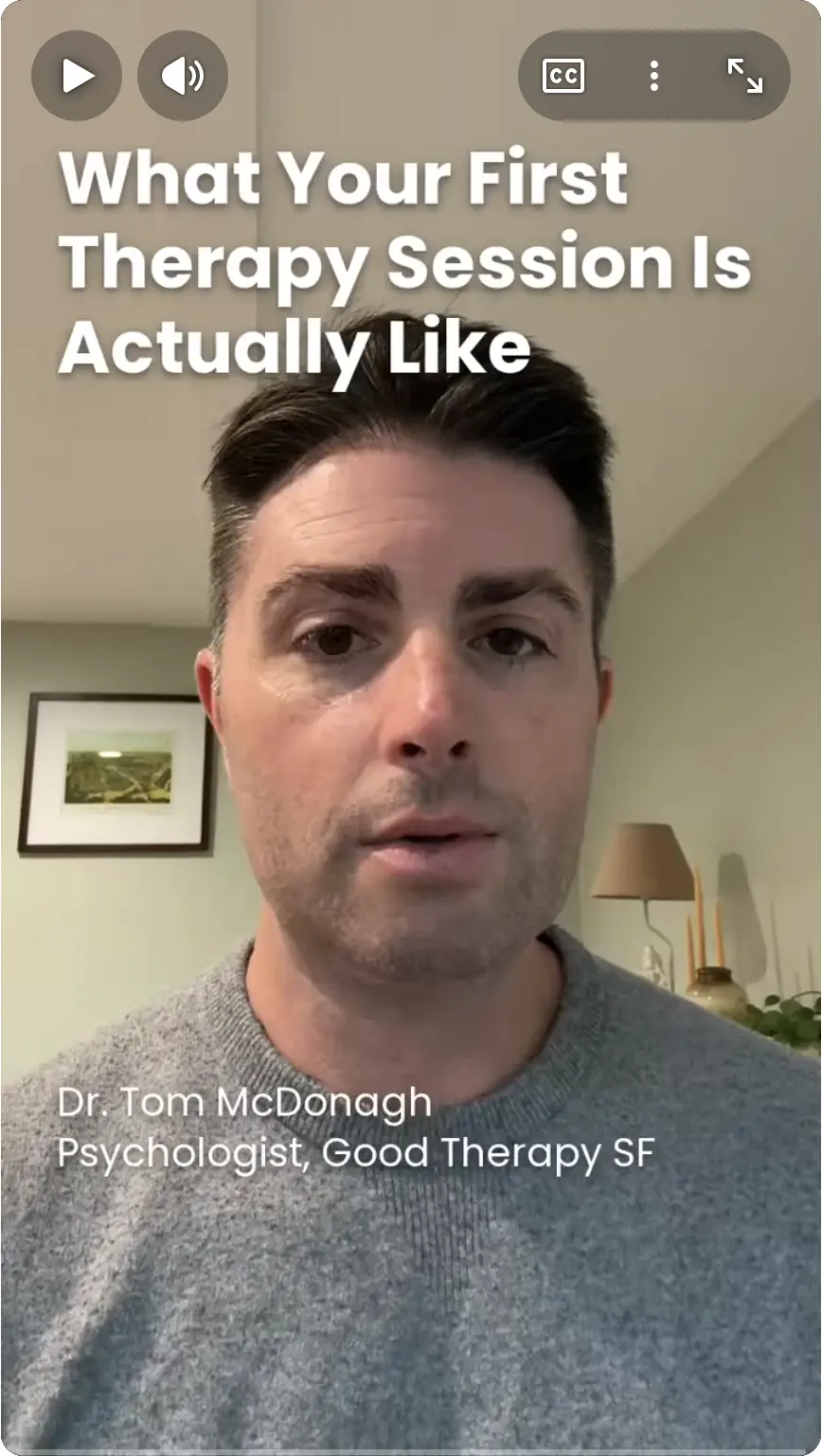
In my experience, not knowing what to expect is one of the biggest reasons people put off booking an appointment. So here is what a first therapy session usually looks like.
Most of your first session is about what brought you in. Your therapist will ask what’s been going on and how long you’ve been dealing with it.
You don’t need to have it all figured out. Some people come in with a clear goal. Others just know something feels off. Both are normal places to start.
You also don’t need to tell your whole life story right away. In my work with new clients, I usually start with what’s happening now. The history comes out over time.
Along the way, your therapist will ask some practical questions. They might ask about your sleep, your work, and your relationships. They might also ask about any therapy you’ve had in the past.
These questions help your therapist get a full understanding of who you are today. Poor sleep and work stress, for example, often affect how anxious or low someone feels.
Some of these questions might feel personal. You can always say you’re not ready to talk about something yet. A good therapist will respect that.
There is usually some paperwork, too. Intake forms tend to cover your contact information, consent, and payment. If you’re wondering about fees and insurance, our page on the cost of therapy explains how they work.
You’ll usually get more out of therapy when you feel comfortable with the person you’re talking to.
It’s okay to ask your therapist how they work. You can ask what the therapy process with them would look like and how often you would meet. You can also ask what approach they use for the things you want help with.
You’re allowed to take your time and decide if this is the right therapist for you. I tell new clients this directly. If the fit isn’t right, finding someone else is a normal part of the process.
Our page of commonly asked therapy questions covers more of what people ask before they start. You can also meet the therapists at Good Therapy SF.
One thing that helps before you go: write down one or two things you want help with. Those one or two things are often enough to get the conversation started.
Your notes don’t need to be polished. “I can’t stop worrying about work” is a perfectly good place to start. So is “I’ve been feeling flat for months, and I don’t know why.”
You might also feel nervous walking in. Feeling nervous before a first session is common. You can tell your therapist that, too.
When you’re ready to take that first step, reach out to Good Therapy SF. We see clients across San Francisco, Marin, and the Peninsula, and we offer a free 15-minute consultation so you can ask questions before you book.
Dr. Tom McDonagh, PsyD, is a licensed clinical psychologist and the founder of Good Therapy SF. He trained at Vanderbilt and completed his postdoctoral work at Kaiser Permanente. His practice focuses on anxiety, OCD, panic, and work stress, with a special focus on San Francisco professionals. Good Therapy SF is located at 870 Market Street, Suite 617, San Francisco, CA.